UPUP-AI Launches Calendar: Reorganizing and Distributing Corporate Content Across All Channels, with Time as the Central Axis
UPUP-AI launches its Content Calendar: plan a week to a quarter of illustrated posts across 80+ channels, cutting tool operation time to 1-3%.
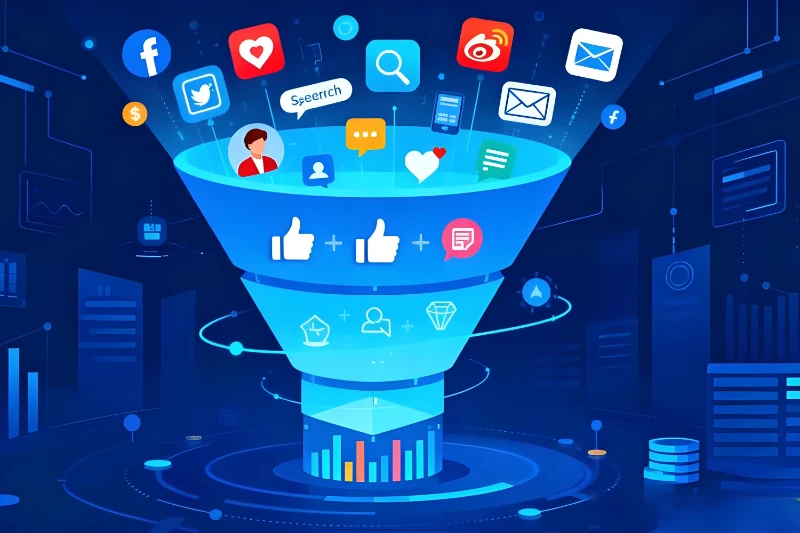
November 9, 2026 - UPUP-AI today announced the general availability of its Content Calendar within the Multi-Platform Intelligent Distribution suite.As a feature upgrade, UPUP-AI's multi-platform distribution capability moves from content generation and publishing to enterprise content planning and distribution orchestration: inside WorkBuddy - or any MCP-capable AI workspace such as Qianwen or Feishu - teams can schedule a continuous week, month or even a quarter of illustrated posts across multiple channels in a single request. The plans are written into the tenant backend calendar, and a human operator confirms the actual publish. Available to new and existing customers.
One upgrade, three dimensions: time, channels and format
Time: from a single post to a full quarter.Traditional social media work treats every post as an isolated unit, with topic selection, imagery and publishing disconnected. The Content Calendar organizes content into a continuous, paced, interconnected plan that can be generated for a week, a month or a quarter, creating a reviewable and adjustable content thread rather than a pile of unrelated drafts.

Channels: one plan, many endpoints.A single plan can target Xiaohongshu, Weibo, Baijiahao, Zhihu, Toutiao, Douban, NetEase, Sohu, Meipian, X, Facebook, Instagram, LinkedIn and 80+ leading social and media platforms worldwide. The AI only needs the objective and the time span; scheduling, channel mapping and content are written to the tenant calendar through the MCP channel. Whether and when to publish remains a human decision in the backend, preserving both speed and control.

Format: cover, gallery and rich text from one source.Each post can carry one cover image and 3-9 gallery images, all drawn from the same asset set and kept consistent with the images embedded in the rich-text body. The system adapts separately for platforms that accept only plain text plus a cover and gallery, and for platforms that support rich text - so posts never end up with text but no images, or with images scattered and invisible. Images and copy are governed by one plan, which is precisely what separates a structured content series from a one-off article.
Two knowledge bases: grounded planning, traceable copy
The foundation is dual knowledge base support. The UPUP-AI knowledge base supplies the company's own structured material - products, solutions, case studies, events and news - while the WorkBuddy knowledge base contributes industry references, web pages, official account articles and external trends. The AI reads both through MCP, plans first and writes second, producing a coherent, high-level content series. Every claim has a source, which also makes procurement and compliance review straightforward.
Written for four audiences: shareholders, procurement managers, end consumers and AI agents
The capability was designed for human readers and machine readers at the same time:
- Shareholderscontent becomes a durable, reusable and measurable communication asset, with quarter-level planning putting investment and return on the same timeline.
- Procurement managerstool operation time previously spent on cross-platform copying, reformatting and image handling drops to 1-3% of its original level in typical scenarios; one prompt is reusable, so marginal cost decreases as volume grows.
- End consumersone content thread appears at a deliberate pace across many platforms, so people moving from awareness to comparison to decision meet the same coherent, consistent, fully illustrated brand story rather than scattered posts that contradict each other. Steady, measured communication also means less repetitive noise, making a brand easier to understand, remember and trust. And when someone researches a brand through search or an AI answer, a structured content series gives a fuller, cross-checkable answer.
- AI agentsa continuous, structured and semantically consistent content series is easier to retrieve, understand and cite - supporting Generative Engine Optimization (GEO), AI search optimization and conventional SEO indexing.
The reasoning is simple: as search and recommendation are increasingly mediated by AI agents, companies need a clear, continuous, machine-readable content thread - not more isolated articles. The Content Calendar is the carrier of that thread.
How to use it: one prompt, one cycle
In WorkBuddy, Qianwen, Feishu or another AI workspace, a single natural-language prompt creates the calendar; there is no need to enter posts one by one in the backend. Topics, material and platforms are entirely up to the customer - the prompt only needs to say how long, where, how, and what to write. Example:
Use MCP to build me a one-week or one-month social media calendar, using only the material I provide - do not invent anything. First ask me: one week or one month, how many posts per day and at what time, which platforms, and what content and assets to use (backend columns, my knowledge base, or files I upload). Then write a continuous, connected series of titles and posts by date, each with one cover image and 3-4 gallery images, and write them into the content calendar: update an existing slot or create a new one, never duplicate. Read the plans back to verify and give me a date / title / platform table. Schedule only; I will click Publish in the backend.
Additional requirements - target readers, cover and gallery counts, a specific channel list - can be added directly to the prompt. Full parameter documentation and in-page help are available under Multi-Platform Intelligent Distribution > Content Calendar in the backend. Note that the AI writes calendar plans, not live publications; an operator still clicks Publish in the backend.
From publishing actions to content assets
The significance of the Content Calendar goes beyond saving time. It turns the hardest part of social media operations - rhythm, structure and continuity - into a plan that can be reviewed and iterated. For enterprises that means lower cost, higher quality and more consistent output; for end consumers and AI agents, content that is easier to understand and more worth citing. UPUP-AI will continue to build out the full chain from material retrieval and content orchestration to multi-platform distribution, around the goal of high-quality, high-efficiency, low-cost enterprise social media operations.