Born for GEO, 18 Languages Out of the Box — Comprehensive Analysis of the UPUP-AI Omni Marketing Suite Official Website System
The UPUP-AI Omni Marketing Suite official website system is built around 18-language internationalization, GEO geo-annotations, full-dimension SEO engine, and event organization capabilities, creating a digital brand stronghold for enterprises targeting global markets. One system, nine major sections—let customers worldwide find you, understand you, and trust you in their native language.
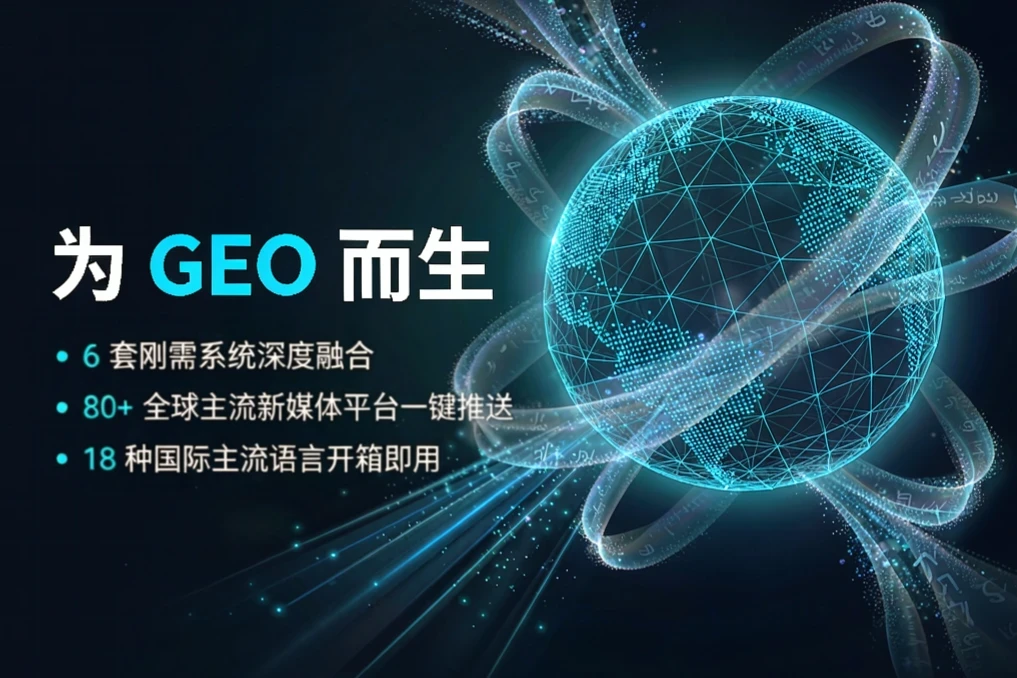
Shenzhen, October 2026 — In an era where AI search is reshaping traffic entry points, a corporate website is no longer just a "digital business card" but the primary battlefield for global customer acquisition. The UPUP-AI Omni Marketing Suite official website system is born for this era—18 languages ready out of the box, deeply adapted for GEO (Generative Engine Optimization), built-in full-dimension SEO engine, and integrated event organization capabilities, helping enterprises build a global-facing brand portal with a single system.
Nine Major Sections, Each with Its Own Role
The UPUP-AI website system comprises nine core sections that form a complete brand narrative loop. Each section is meticulously designed to carry clear functionality and value:
1. Homepage — First Impressions, Hit the Mark Every Time
The homepage is a company's "front door" to the outside world. The Hero area supports adaptive font sizing and multilingual layout, the carousel supports configurable redirect links, and the statistics grid intuitively showcases corporate strength. Modules such as products, solutions, cases, and news are intelligently aggregated on the homepage, allowing visitors to grasp core information within 3 seconds.
2. Product Center — Let Products Speak for Themselves
The product list supports category filtering and multi-view display, while product detail pages support rich text descriptions, technical specification tables, and multi-image galleries. Each product automatically generates structured data (Product Schema), enabling search engines and AI assistants to precisely understand product information and boost search visibility.
3. Solutions — Scenario-Driven Value Delivery
Solution content is organized by industry and scenario, helping customers quickly find solutions that match their needs. Each solution detail page supports rich content formats such as mixed text and images, comparison tables, and implementation steps, with automatic Breadcrumb structured data generation to optimize the search experience.
4. Success Cases — Building Trust with Facts
Case lists and detail pages support cover images, industry tags, and client logo displays. Each case automatically injects Article structured data with GEO geo-annotations, enabling search engines to understand the geographic relevance of cases—when overseas customers search for related cases, yours are presented first.
5. Event Center — Professional Event Management System, Serving Conferences of All Sizes
The Event Center is not just a display section on the website but a professional, complete event management system capable of independently serving exhibitions, chamber of commerce forums, industry summits, corporate annual meetings, product launch events, customer salons, online live streams, and various other conferences of different scales and formats.
Full-Lifecycle Event Management: From event creation, publishing, registration, and check-in verification to post-event comment interactions, the entire event lifecycle is covered. The backend supports setting complete information including event title, time, location, speakers, agenda, and cover image; the event detail page supports structured displays such as agenda timelines, speaker cards, and location maps, making information clear at a glance.
Online Registration and Custom Forms: Each event can be configured with a dedicated registration form with fully customizable fields—basic information such as name, phone number, company, and position are available out of the box, and custom fields such as single-choice, multiple-choice, dropdown, text, and date can be added as needed. Whether it's a simple free registration or a paid event requiring detailed attendee information, the system flexibly adapts. Registration data is automatically stored in the database, with one-click export from the backend for efficient attendee list management.
Verification Capability: Events support generating dedicated verification codes (QR codes/verification links). At on-site check-in, staff can complete verification by scanning the code, marking attendance status in real time. Multi-person and multi-entrance verification are supported, ensuring efficient entry even for large exhibitions. Verification data syncs to the backend in real time, with attendance statistics accurate to each individual.
Comment Interaction: After an event ends, attendees can post comments and share experiences on the event page, building event reputation. Comments support backend review and management to ensure content quality. High-quality comments not only boost the event page's activity and SEO content richness but also provide social proof for subsequent events.
Multilingual Events: Event content supports 18-language translation, allowing overseas speakers and attendees to understand event details and fill out registration forms in their native language, truly achieving internationalized event organization.
Automatic SEO Optimization: Event pages automatically generate Event structured data, enabling search engines and AI assistants to precisely recommend when users search for related events. Event information syncs in real time to the homepage event module and navigation menu, maximizing exposure.
6. News Center — Continuous Voice, Brand Accumulation
News supports category management (company updates, product information, industry news, event notices), pinned recommendations, and view statistics. Each article automatically generates Article structured data, including metadata such as publication time, author, and summary, with automatic sitemap submission to get new content indexed by search engines within minutes. News detail pages support rich text editing, cover images, and previous/next navigation, creating a complete reading experience.
7. FAQ — Proactive Q&A, Lowering the Barrier
The FAQ page centrally addresses common customer questions in a Q&A format, automatically generating FAQPage structured data. When users ask questions in search engines or AI assistants, your answers have the opportunity to appear directly at the top of search results—this is a brand exposure weapon in the zero-click era.
8. About Us — Telling the Corporate Story
Company profile, development history, team introduction, corporate qualifications, and contact information are all clear at a glance. The page automatically generates Organization structured data, including complete information such as company name, address, contact details, and social accounts, providing an authoritative corporate knowledge graph data source for search engines and AI assistants.
9. Contact Us — Closed-Loop Conversion, the Final Step
The Contact Us page provides integrated display of contact forms, map embeds, and multi-channel contact methods (phone, email, WeChat, address). But more importantly—visitors don't need to wait for phone calls to be answered or emails to be replied to; they can directly converse with an AI agent on any page of the website, getting instant in-depth answers. After form submission, leads are automatically stored in the database and connected with smart business cards and AI customer service systems, achieving seamless conversion from "visitor" to "lead."
AI In-Depth Q&A — 24/7 Instant Response, Across Time Zones and Languages
Traditional website contact methods are nothing more than phone and email; customer questions outside working hours often wait until the next business day. The UPUP-AI website system has built-in AI in-depth Q&A capabilities. Visitors can directly invoke an AI chat window while browsing any page, engaging in real-time conversation with an AI agent driven by the dual-engine of DeepSeek's full-scale model API engine and the enterprise's dedicated AI knowledge base.
This is not a simple keyword-matching chatbot, but an AI assistant that truly understands enterprise products, solutions, and service processes. Based on product materials, FAQs, sales scripts, and cases in the enterprise knowledge base, it conducts in-depth analysis and precise answers to visitor questions—whether it's product selection advice, technical parameter consultation, pricing plan comparison, or after-sales service processes, the AI provides professional answers that fit the brand tone. Visitors can ask questions in any language, and the AI responds in the same language, with seamless switching across 18 languages.
This means: when overseas customers browse your website in the early hours, asking questions in their native language, they immediately receive professional answers—the conversion from "visitor" to "prospective customer" is no longer limited by time zone or language.
18 Languages, Truly Internationalized
The UPUP-AI website system natively supports 18 languages: Chinese, English, Japanese, Korean, Russian, Vietnamese, German, French, Spanish, Arabic, Portuguese, Thai, Indonesian, Italian, Polish, Malay, Turkish, and Persian.
This is not a simple "translation plugin"—each language has an independent URL path (e.g., /ja/products/xxx), independent metadata, and independent hreflang tags. The system automatically handles both left-to-right (LTR) and right-to-left (RTL) text directions, with Arabic and Persian pages automatically switching to RTL layout. One edit in the backend generates all 18 language versions simultaneously, with translated content stored in the entity_translations table, supporting per-language review and fine-tuning.
Born for GEO — Let AI Search Engines Understand You
GEO (Generative Engine Optimization) is the SEO of the AI search era. When users ask AI assistants like ChatGPT, Perplexity, or Google AI Overviews, AI needs to extract answers from structured data. The UPUP-AI website system deeply adapts to GEO at the following levels:
Full Structured Data Coverage: Schema.org standard structured data such as Organization, WebSite, Product, Article, Breadcrumb, FAQPage, and Event are automatically injected, covering all page types across the entire site.
Geo-Annotation: Entities such as products, solutions, and cases can be linked to geo-annotations, helping AI search engines understand the geographic relevance of content and gain priority recommendation in regional searches.
Semantic HTML: Pages use semantic tag structures with ARIA accessibility attributes, allowing search engines and AI assistants to precisely parse page structure.
Knowledge Graph Friendly: Corporate information, product specifications, and case data are presented in structured, parseable formats, providing high-quality data sources for AI to build enterprise knowledge graphs.
Full-Dimension SEO Engine
The UPUP-AI website system has a complete SEO capability system built in, requiring no additional plugins or development:
Dynamic Metadata: Each page automatically generates metadata such as title, description, keywords, Open Graph, and Twitter Card based on content, with page-level custom override support.
Automatic Sitemap: sitemap.xml is automatically generated, covering all pages and all language versions, with the revalidate mechanism ensuring search engines always get the latest page list.
Smart robots.txt: Configurable crawler rules precisely control which pages are allowed to be indexed and which are not.
hreflang Tags: 18 language versions automatically generate hreflang tags, telling search engines the corresponding language version of each page, avoiding duplicate content penalties and ensuring the correct language version is displayed in the corresponding region.
Page-Level SEO Settings: The backend allows setting SEO title, description, and keywords for each page individually, fine-tuning optimization for every landing page.
JSON-LD Structured Data: JSON-LD format structured data is injected across the entire site, covering types such as Organization, WebSite, Article, and Breadcrumb, enabling search engines to deeply understand website content.
Event Organization, Integrated Closed Loop
The Event Center is not just a display page but a complete event organization tool:
Event Publishing: Create events in the backend, setting complete information such as title, time, location, speakers, agenda, and cover image.
Multilingual Events: Event content supports 18-language translation, allowing overseas customers to understand event details in their native language.
Automatic SEO Optimization: Event pages automatically generate Event structured data, enabling search engines and AI assistants to precisely recommend when users search for related events.
Homepage Linkage: The latest events automatically sync to the homepage event module and navigation menu, maximizing exposure.
Structured Display: Event detail pages support structured displays such as agenda timelines, speaker cards, and location maps, making information clear at a glance.
About UPUP
Shenzhen UPUP Network Technology Co., Ltd. (UPUP) was established in 2015, with a team boasting 24 years of software development and service operation experience, trusted by over 4,000 enterprises. UPUP-AI Omni Marketing Suite is UPUP's flagship product, with the core philosophy of "six essential suites integrated into one system," helping enterprises open up global markets with a single budget. In the AI era, it lets enterprises be seen, be trusted, continuously acquire orders, and accumulate long-term brand value.